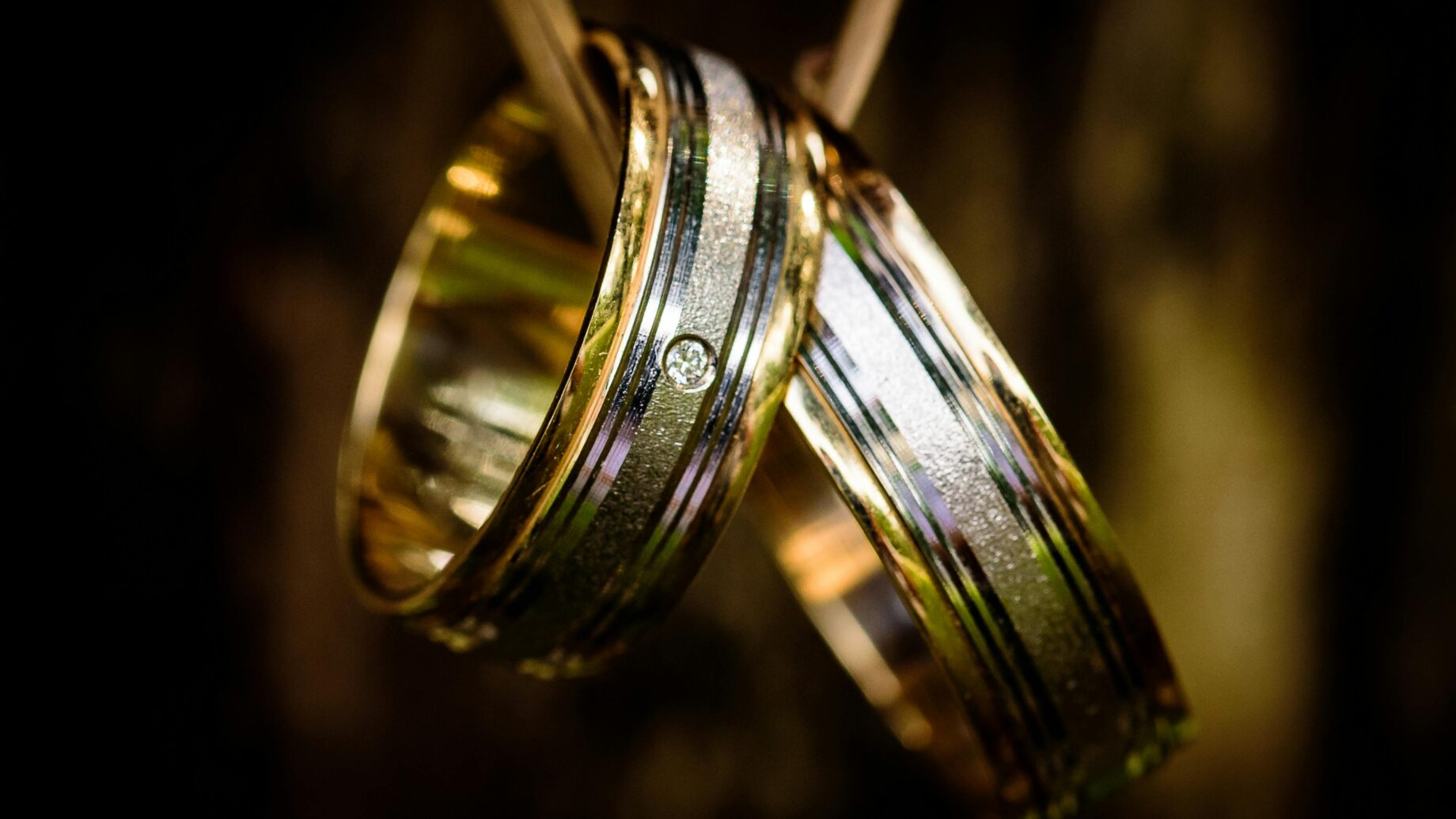
Learning how to match a wedding band with an engagement ring is one of the most satisfying steps of the bridal journey. The two rings will sit together for a lifetime, so the goal is harmony — a pairing where each piece flatters the other rather than competing for attention. This guide covers the rules that matter, the band styles that suit each ring, and the traditions that govern how the pair is worn.
The good news: there is no single correct answer. A wedding band can match the engagement ring exactly, complement it subtly, or contrast it deliberately. What counts is a considered relationship between metal, profile, proportion and detail.
Do a Wedding Band and Engagement Ring Have to Match?
No — a wedding band and engagement ring do not have to match perfectly, but they should feel intentional together. Many couples choose a matching bridal set for seamless cohesion; others pair a plain band with an ornate ring for balance, or mix metals for a modern, personal look.
Before deciding, consider how often the rings will be worn together and whether you prefer a uniform or layered aesthetic. If your engagement ring is a statement piece, a restrained band keeps the pairing elegant.
The Golden Rules for Matching a Wedding Band
Four principles make almost any pairing work.
1. Match — or deliberately mix — the metal
The simplest route to harmony is to use the same metal for both rings: platinum with platinum, or 18-carat gold in the same hue. Mixing metals can look beautifully contemporary, but it should read as a choice — ideally echoed elsewhere, such as a rose-gold band picking up a rose-gold prong basket.
2. Mind the profile
The band should sit flush against the engagement ring. A contoured (shadow) band curves around a low-set or distinctive centre stone, while a straight band suits a ring with a high setting that leaves room beneath the stone.
3. Balance the proportions
Pair a bold engagement ring with a slimmer band, and a delicate ring with a band of similar weight. Matching two heavy rings can feel unbalanced on the finger.
4. Echo the details
Repeat one design cue — milgrain edges, pavé diamonds or a particular finish — across both rings to tie them together without making them identical.
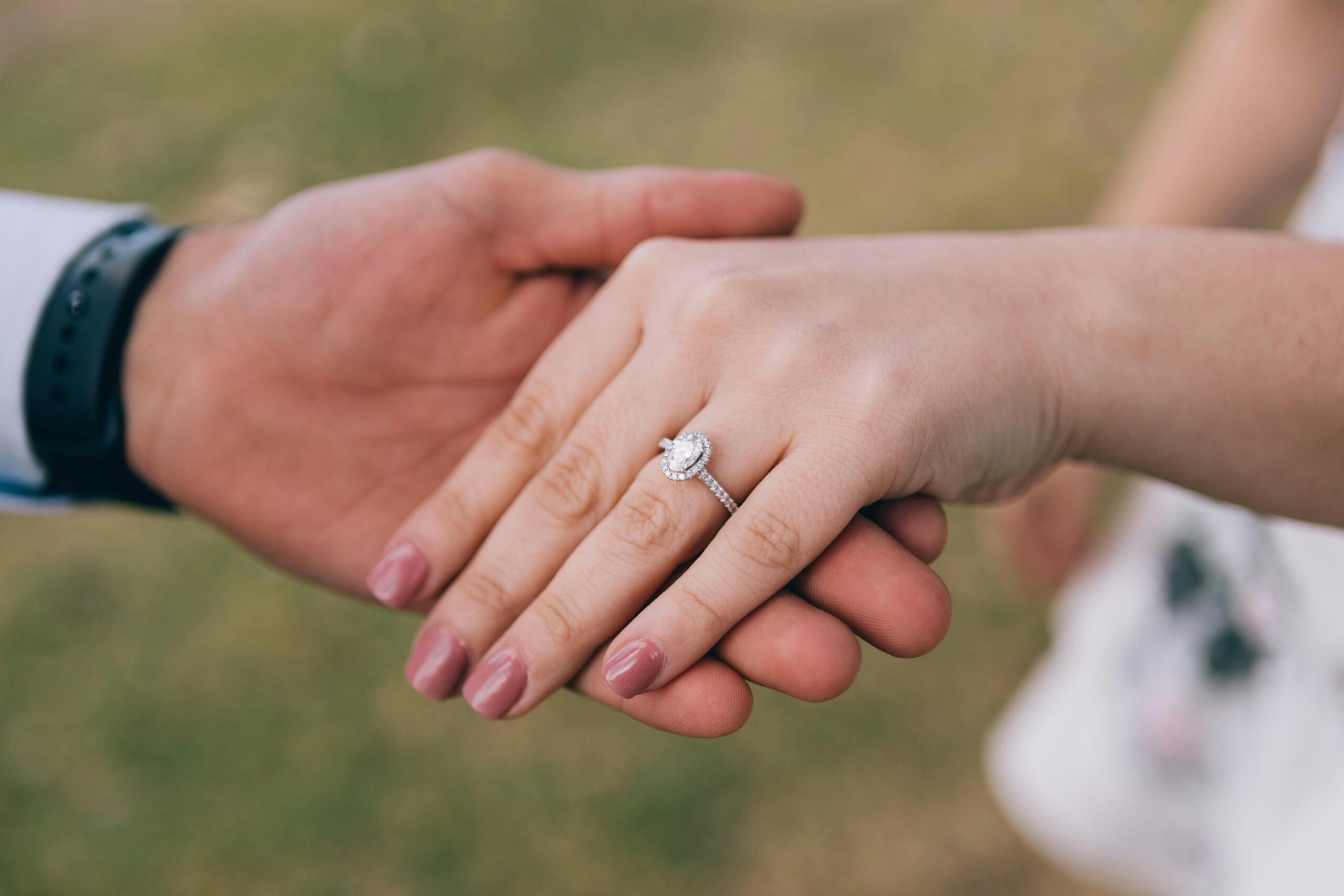
Wedding Band Styles and the Rings They Suit
Choosing the band style is easier once you know your engagement ring’s silhouette. The table below pairs common bands with the rings they flatter most.
| Wedding band | Pairs best with |
|---|---|
| Plain / classic band | A halo, pavé or otherwise ornate engagement ring |
| Pavé / eternity band | A simple solitaire that welcomes extra sparkle |
| Contoured / shadow band | Low-set stones, pear or marquise shapes |
| Curved / notched band | Rings with a dropped or distinctive centre stone |
| Two thin stacking bands | A centre ring you want to frame on both sides |
| Flat / bezel band | Modern, bezel-set engagement rings |
If you have not yet settled on the centre ring, our edit of the best engagement rings in 2026 is a useful starting point, and the guide to engagement ring styles and settings explains how each setting affects the band that will sit beside it.
How to Wear Them: Stacking Order and Traditions
By the most established convention, the wedding band is worn closest to the hand, with the engagement ring stacked above it. The symbolism is old: the band sits nearer the heart, while the engagement ring stays visible on top.
This is a tradition rather than a rule. Some wear the engagement ring first to honour the proposal; others keep the rings on separate fingers or hands for comfort and security during active days. Soldering the two into a single bridal set is another popular option once the look is settled.
Geography shapes the choice too. In the United States, the United Kingdom and much of Western Europe, both rings are worn on the left ring finger. In parts of Eastern and Northern Europe, rings are traditionally worn on the right hand, and some customs move the ring from one hand to the other between engagement and marriage.
Frequently Asked Questions
Which goes on first, the wedding band or the engagement ring?
Traditionally the wedding band goes on first, closest to the hand, so it sits nearest the heart, with the engagement ring stacked above it. Wearing them in the reverse order is equally acceptable.
Do the metals have to match?
No. Matching metals is the safest path to harmony, but a deliberate mix — ideally echoed in a shared detail — can look thoroughly modern.
What if my engagement ring has a low-set stone?
Choose a contoured or notched band that curves around the setting, so the two rings sit flush without a visible gap.
Bringing the Pair Together
Matching a wedding band with an engagement ring comes down to four decisions — metal, profile, proportion and detail — and a personal call on how you wish to wear them. Get those right and the pair will look intentional for decades.
For the centre ring itself, see our selection of the best engagement rings in 2026, and deepen your understanding of every silhouette with our guide to engagement ring styles and settings.
