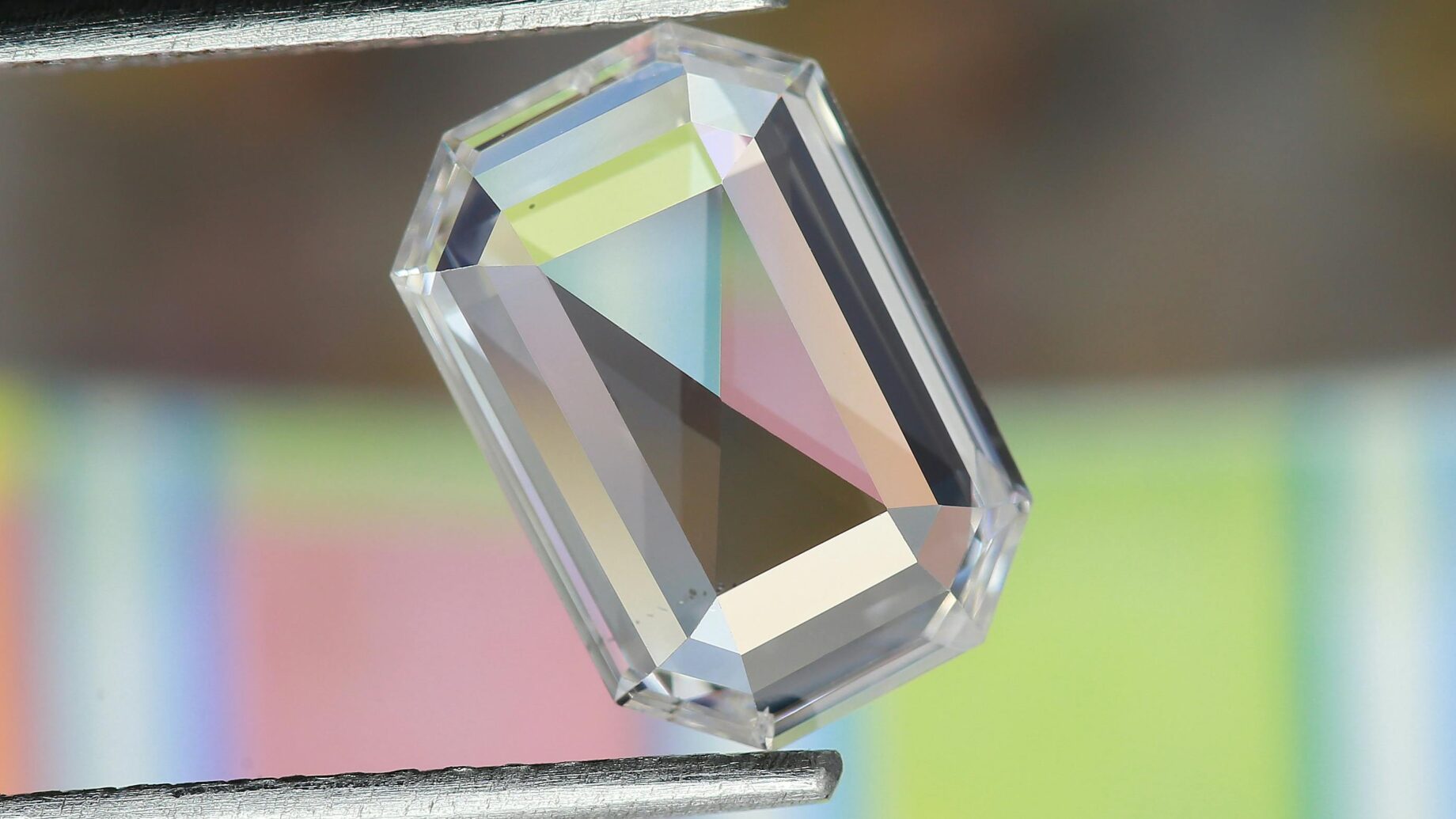
The emerald cut engagement ring is the choice of those who love understated, architectural elegance. Its long, step-cut facets create a luminous “hall of mirrors” rather than fiery sparkle, and the right setting is what brings that quiet drama to life. This guide explains the best emerald cut engagement ring settings, the metals and proportions that flatter the shape, and how to choose with confidence.
Because the emerald cut reveals clarity so openly, every design decision — from prong placement to side stones — matters more than it would on a brilliant cut.
What Is an Emerald Cut?
An emerald cut is a rectangular step cut with cropped corners and long, parallel facets. Instead of the intense sparkle of a round brilliant, it produces broad flashes of light and a clear, mirror-like depth. The result is elegant, vintage-leaning and effortlessly modern.
That openness is also why cut quality and clarity matter so much: the step facets act like windows into the stone.
The Best Settings for an Emerald Cut Engagement Ring
The setting frames the stone and protects its corners. The table summarises the settings that suit an emerald cut best, and why.
| Setting | Why it suits an emerald cut |
|---|---|
| Four-prong solitaire | Keeps the focus on the stone’s clean lines; classic and timeless |
| Three-stone with tapered baguettes | Echoes the step-cut geometry for a balanced, elegant look |
| Three-stone with trapezoids | Adds width and brilliance while staying linear |
| Halo | Surrounds the stone with sparkle and boosts apparent size |
| Bezel | Protects the corners and gives a sleek, modern profile |
| Pavé band | Adds shimmer to the band without distracting from the centre |
| East-west | Sets the stone horizontally for a contemporary, fashion-forward look |
For a wider view of how settings change a ring’s character, see our pillar guide to engagement ring styles and settings. Three-stone designs with tapered baguettes are the classic emerald-cut pairing, since their straight lines mirror the centre stone.
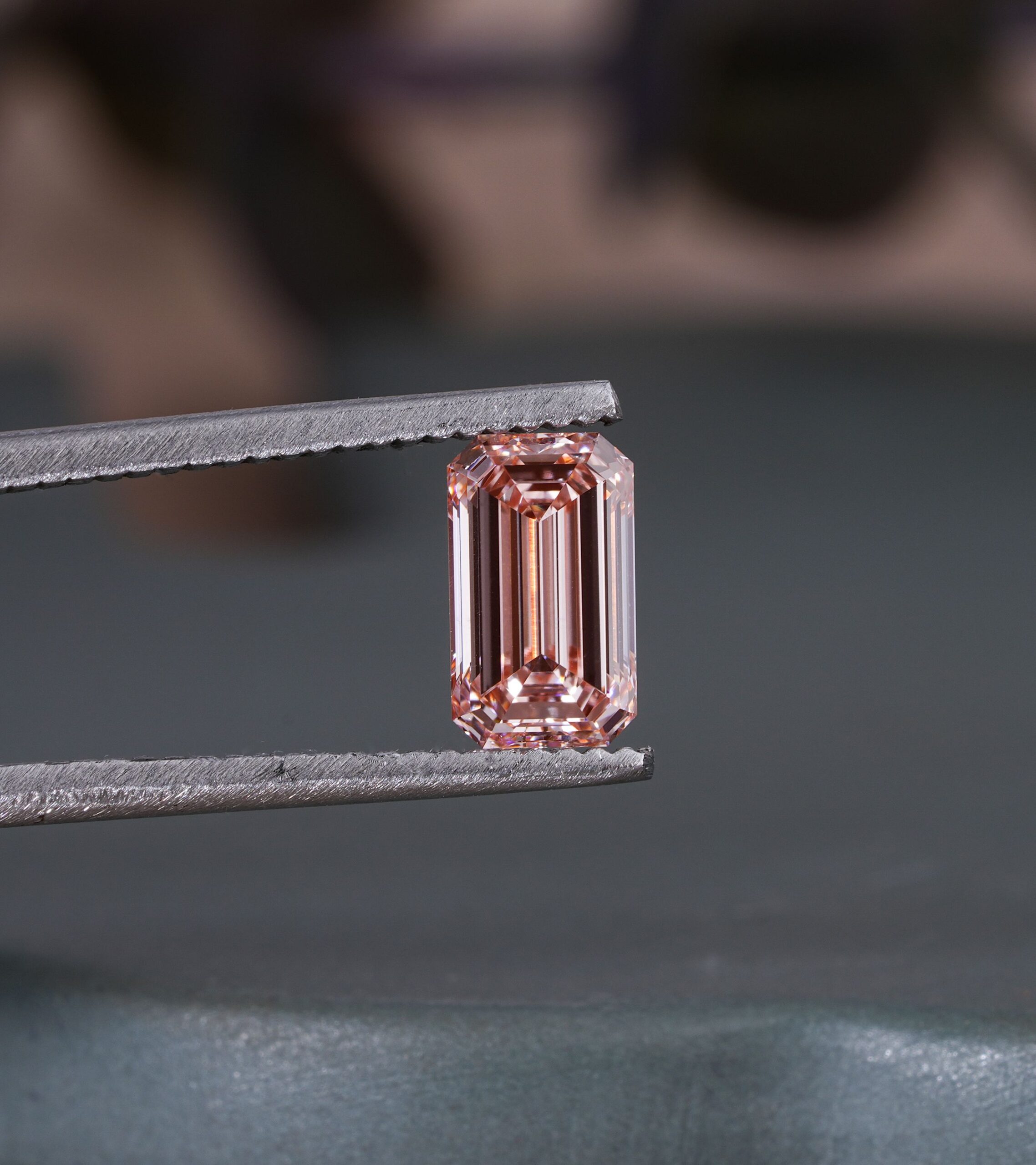
Metal and Proportions for an Emerald Cut
A few specifics help an emerald cut look its best.
- Ratio: a length-to-width ratio around 1.30–1.50 gives the classic rectangular silhouette.
- Metal: platinum and white gold enhance the icy clarity; yellow gold lends a warm, vintage feel.
- Prongs: prongs sit on the corners to protect the most vulnerable points.
- Clarity: favour a higher clarity grade, since step facets reveal inclusions more readily.
If you are still comparing shapes and budgets, our edit of the best engagement rings in 2026 puts the emerald cut in context alongside other favourites.
Emerald Cut vs Asscher Cut
Both are step cuts, but the Asscher is square with more pronounced cropped corners and a deeper, geometric “windmill” effect. The emerald cut is rectangular and elongates the finger, while the Asscher reads as a more symmetrical, Art Deco square. Both are rising again among the trending engagement ring styles of 2026.
Frequently Asked Questions
What setting is best for an emerald cut diamond?
A four-prong solitaire or a three-stone setting with tapered baguettes is generally considered best, as both highlight the stone’s clean, linear geometry. A halo is ideal if you want extra sparkle and size.
Do emerald cut diamonds show inclusions?
Yes. The open step facets make inclusions easier to see than in a brilliant cut, so a higher clarity grade is worth prioritising.
What is the ideal ratio for an emerald cut?
A length-to-width ratio of roughly 1.30 to 1.50 produces the classic elongated rectangle most buyers prefer; closer to 1.0 looks more square.
Choosing Your Emerald Cut Ring
An emerald cut rewards restraint: a clean setting, well-placed prongs and a quality stone create a ring that feels both timeless and quietly distinctive. Decide on your ratio and metal, then choose a setting that frames — rather than competes with — the stone.
Deepen your research with our guide to engagement ring styles and settings, and see how the emerald cut fits the year’s mood in trending engagement ring styles 2026.
