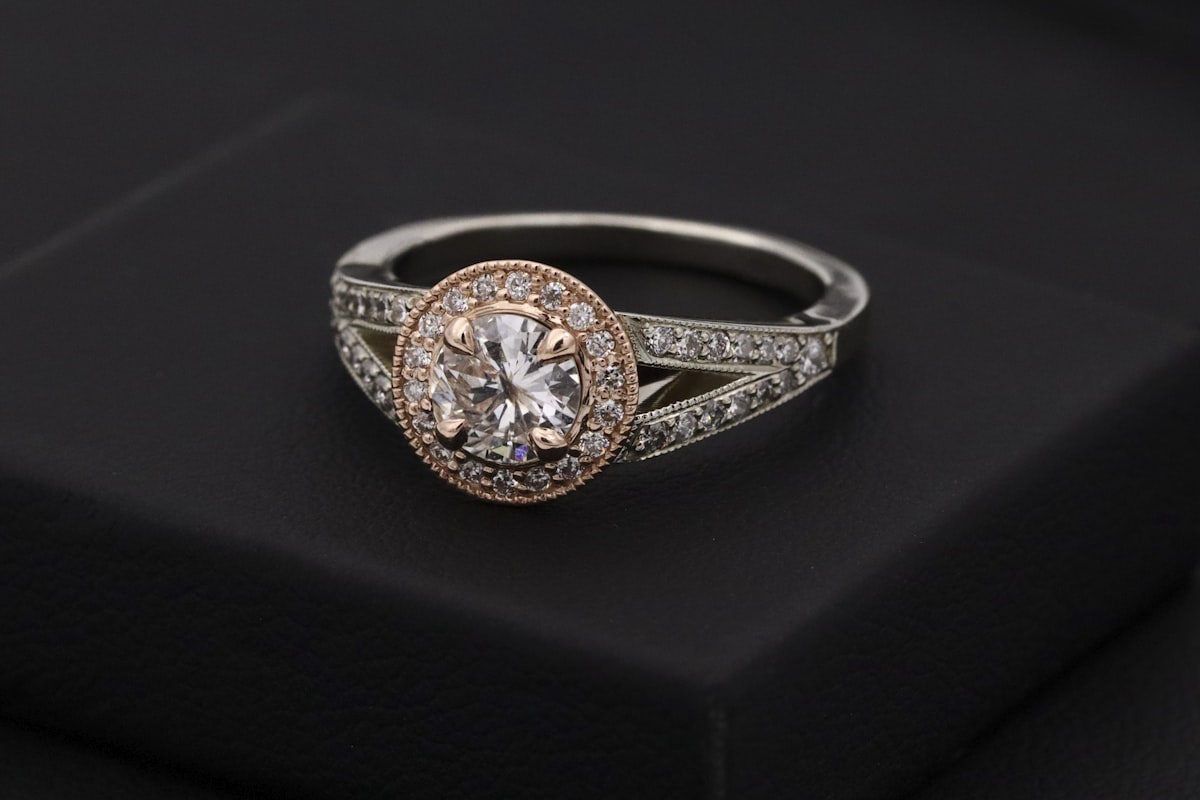
Minimalism is the hardest thing to get right in fine jewellery. When there is no ornament to hide behind — no halo, no pavé, no distraction — every proportion, every millimetre of the band and every facet of the stone is exposed. The best minimalist engagement rings of 2026 are therefore not the simplest to make but the most demanding: they live or die on symmetry, precision and the quality of a single diamond. This guide breaks down every silhouette worth knowing, who each suits, and — crucially — what separates a minimalist ring that justifies its price from one that merely looks plain.
Minimalism sits within the broader quiet luxury movement — the same rejection of visible logos and loud signalling, applied to the hand. For the coloured-stone counterpart to this guide, see our companion piece on the best sapphire engagement rings 2026.
What Makes a Minimalist Engagement Ring?
A minimalist engagement ring reduces the design to its essentials: a single stone, a clean band, and a setting that holds the diamond with as little metal as the structure allows. The defining principle is negative space — the deliberate use of emptiness to let the stone breathe. Minimalism is not the absence of design; it is design with nothing left to remove. The result reads as quiet, timeless and everyday-wearable, which is precisely why it has become the dominant modern bridal aesthetic. Minimalist does not mean plain: the discipline lies in the millimetre-level symmetry that only becomes visible when there is nothing else to look at.
The lineage matters. The raised six-prong solitaire — the setting that lifts the diamond above the band to maximise light — was introduced by the Tiffany® Setting in 1886 and effectively invented the category every ring below descends from. Understanding that origin is part of understanding why the minimalist solitaire remains the reference point for the whole genre.
The Minimalist Solitaire
The solitaire is the purest minimalist engagement ring: one diamond, one band, nothing else. In its minimalist form the band narrows to 1.5–2 mm and the setting recedes, so the stone appears to float. A round brilliant in a four-prong setting is the timeless expression; an elongated cushion or oval reads more contemporary. The solitaire suits almost everyone, which is why it endures — but it is also the least forgiving, since a poorly cut stone has nowhere to hide.
The Slim (Thin) Band Solitaire
Reducing the band to a slim 1.5 mm shank exaggerates the diamond and creates the “floating” effect central to soft minimalism. A knife-edge or tapered shank — where the band narrows as it approaches the stone — amplifies the illusion further. This is the silhouette most associated with the modern minimalist look worn by Carolyn Bessette-Kennedy, whose understated ring became the enduring reference for quiet bridal taste.
The Bezel (Rubover) Setting
A bezel encircles the diamond in a thin rim of metal rather than gripping it with prongs. It is the most architecturally minimalist setting — sleek, seamless and exceptionally secure, making it the practical choice for active hands and everyday wear. The rubover creates a smooth, modern silhouette with no snagging, and pairs especially well with round and oval stones. Increasingly specified in platinum for its cool, continuous line.
The East-West Setting
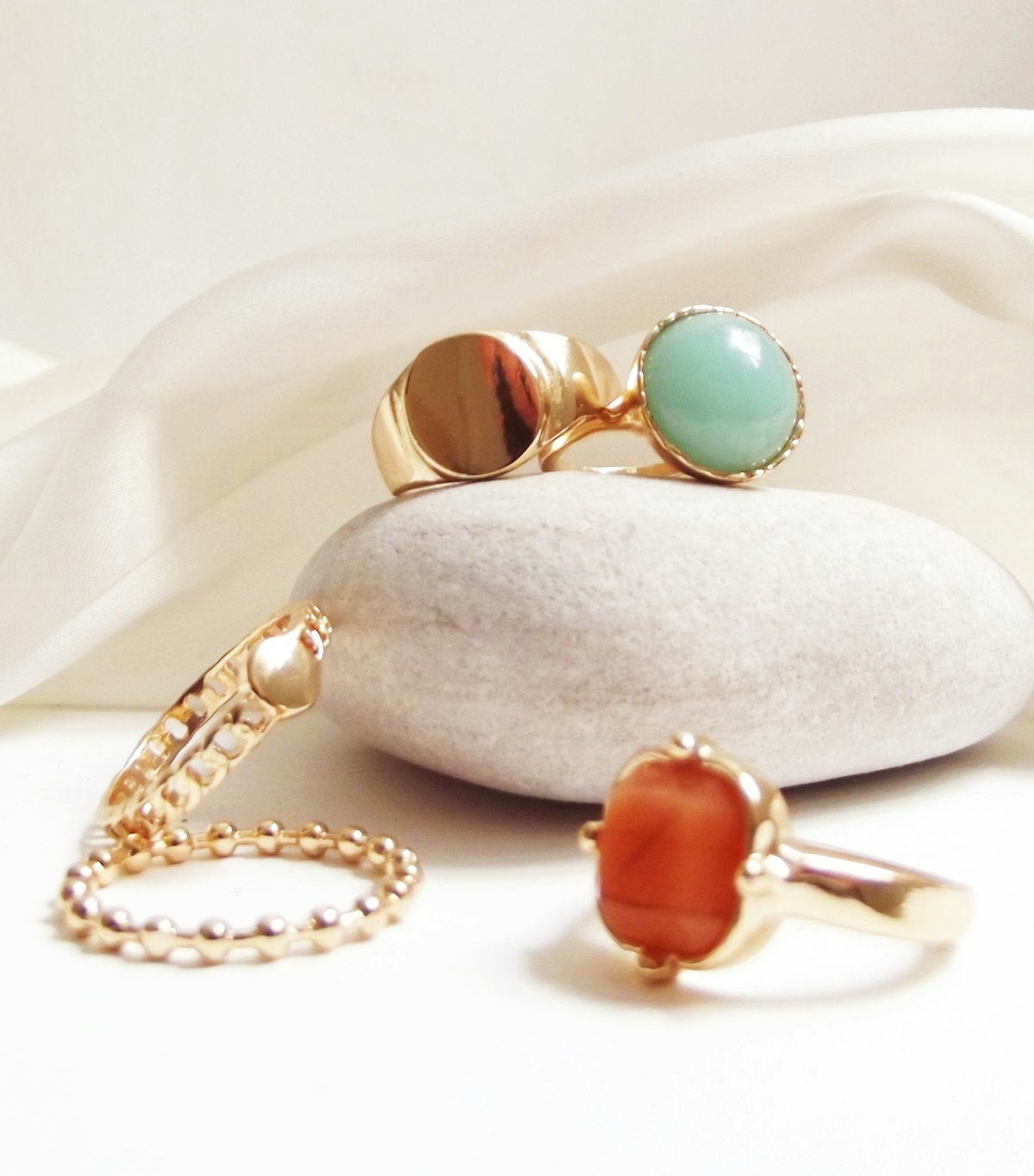
Turning an elongated cut — oval, emerald, marquise or cushion — horizontally across the finger rather than vertically is the defining “modern minimalist” move of recent years. The east-west orientation reads as quietly unconventional without any added ornament, and elongates the finger. Zendaya’s east-west cushion brought the setting into the mainstream and it remains a signature of architectural, design-literate minimalism.
The Floating & Tension-Style Setting
Tension and tension-style settings suspend the diamond so it appears held by nothing at all — the ultimate expression of negative space. A true tension setting uses the spring pressure of the metal itself; a tension-style setting adds a discreet hidden bezel or bar for security. The effect is sculptural and resolutely contemporary, best suited to those who want a minimalist ring that still makes a quiet structural statement.
The Hidden Halo & Ring-and-Band-in-One
For buyers who want minimalism from above but a touch of detail up close, a hidden halo places a ring of small diamonds beneath the centre stone — invisible face-on, a subtle sparkle from the side. The integrated “ring-and-band-in-one”, where the engagement ring and wedding band are conceived as a single fused line, is the other quietly sophisticated route: one clean silhouette instead of two stacked ones.
Organic, Asymmetric & Sculptural Minimalism
The newest branch of the category is “soft minimalism” — organic, slightly asymmetric bands, hand-finished textures and sculptural forms that reject rigid geometry in favour of something more human. Interlocking and split-shank minimalist designs sit here too. This is minimalism as craft expression rather than pure reduction, and it suits buyers who find the classic solitaire too expected.
Best Minimalist Engagement Rings 2026: Comparison Table
| Style | Best diamond cut | Wearability | Occasion | Price tier |
|---|---|---|---|---|
| Minimalist solitaire | Round brilliant, oval | Very high | Everyday to formal | ££–££££ |
| Slim-band solitaire | Round, elongated cushion | High | Everyday | ££–£££ |
| Bezel / rubover | Round, oval | Exceptional | Active everyday | ££–£££ |
| East-west | Oval, emerald, marquise | High | Everyday, design-led | ££–£££ |
| Floating / tension-style | Round, princess | Medium-high | Statement everyday | £££–££££ |
| Hidden halo | Round, oval, cushion | High | Everyday to formal | £££ |
| Organic / sculptural | Old-mine, rose-cut, round | High | Design-led everyday | ££–££££ |
What to Look For: Why a Minimalist Ring Justifies Its Price
Because a minimalist engagement ring has no ornament to distract the eye, its entire value rests on two things: the symmetry of the setting and the quality of the single stone. This is where the fine tier and the mass market diverge decisively.
Symmetry and setting precision. On a minimalist ring, a prong that sits a fraction off-centre, a band that tapers unevenly or a bezel with an inconsistent rim is immediately visible. Achieving perfect symmetry in so little metal is a genuine test of bench craftsmanship — the reason two rings that look identical in a photograph can differ so much in the hand.
Stone quality. With a solitaire, the diamond is the ring. Cut grade determines how much light returns to the eye; at the fine tier, an Excellent-cut stone with strong optical symmetry will out-sparkle a larger but poorly cut diamond every time. Certification (GIA or equivalent), documented origin and cut precision are what a minimalist ring is actually selling — and what a budget solitaire quietly compromises on. When the design is stripped back to one stone, the stone has to be worth looking at.
Metal choice. Platinum is the connoisseur’s minimalist metal — dense, durable, naturally white and requiring no rhodium plating. 18k yellow and rose gold read warmer and more contemporary; mixed-metal or two-tone bands are a subtle way to add interest without ornament.
FAQ — Best Minimalist Engagement Rings 2026
Are minimalist engagement rings durable enough for everyday wear?
Yes — and some are the most durable of all. A bezel (rubover) setting fully encircles the diamond in metal, making it the most secure and snag-free option for active, everyday wear. Slim-band solitaires are perfectly durable in platinum or 18k gold provided the shank is not reduced below around 1.5 mm. Tension-style settings should include a hidden secondary support for long-term security.
What is the most timeless minimalist engagement ring style?
The raised round-brilliant solitaire remains the most timeless — it is the silhouette the Tiffany® Setting established in 1886 and it has never dated. A slim four-prong or bezel-set round brilliant in platinum is the safest choice for a buyer who wants a ring that will look as considered in thirty years as it does today.
Does a minimalist ring mean a smaller or cheaper diamond?
No. Minimalism refers to the setting, not the stone. Because the design places the entire visual focus on a single diamond, many buyers actually invest more in cut quality and certification than they would for a ring where a halo or pavé distracts the eye. Minimalism rewards spending on the stone rather than the surround.
Which diamond shape works best for a minimalist ring?
Round brilliants maximise sparkle and suit the classic solitaire; elongated cuts — oval, elongated cushion, emerald and marquise — read more modern and flatter the finger, especially in an east-west orientation. Emerald cuts, with their clean step-cut lines, are the most inherently minimalist shape.
Natural or lab-grown diamond for a minimalist solitaire?
Both are chemically identical. Lab-grown offers a larger stone for the budget; natural diamonds carry provenance, rarity and long-term value. On a minimalist ring, where the stone is the entire statement, buyers prioritising heirloom and investment value tend to choose a certified natural diamond with a documented origin and Excellent cut grade.
