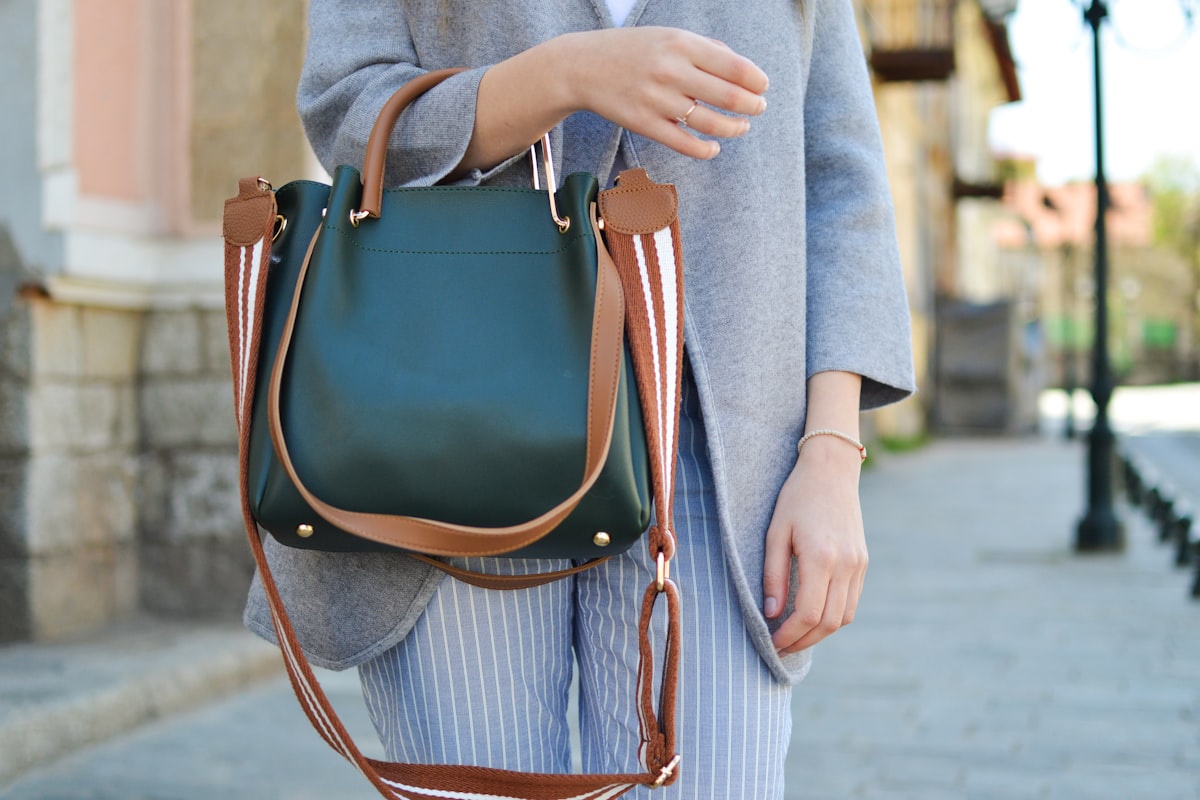
For decades, luxury and sustainability occupied opposite corners of the fashion conversation. Luxury meant scarcity, craft and cost; sustainability meant compromise, transparency and restraint. Today, the most forward-thinking sustainable luxury leather brands have collapsed that opposition — proving that longevity, material traceability, ethical manufacturing and genuine craftsmanship are not alternatives to luxury but its most rigorous expression. This guide ranks the ten leading sustainable luxury leather brands of 2026, with a comparison table, a buying checklist and a complete FAQ.
Sustainability is inseparable from the broader conversation about what luxury leather objects should be. See our guide to timeless luxury leather bags — bags designed to last decades — and our edit of minimalist luxury leather bags, where formal reduction aligns naturally with responsible consumption.
What Makes a Truly Sustainable Luxury Leather Brand?
The term “sustainable” is among the most abused in fashion marketing. Identifying genuine sustainable luxury leather brands requires looking beyond the press release to four measurable dimensions.
Leather sourcing and tanning. The leather industry’s environmental impact is concentrated in two areas: livestock rearing and tanning. Sustainable luxury leather brands source from certified farms under the Leather Working Group (LWG) framework, favour vegetable tanning (which uses tree bark and plant matter rather than heavy metals), and increasingly trace each hide back to its origin. Chrome-free and LWG Gold-rated tanneries are the industry’s current benchmarks.
Manufacturing conditions. Sustainability without labour ethics is greenwashing. The most credible sustainable luxury leather brands publish supply chain transparency reports, partner with certified facilities, and — in the most committed cases — manufacture in-house or in proximity to their headquarters, reducing both logistical footprint and oversight distance.
Longevity design. A luxury leather bag designed to last thirty years is categorically more sustainable than a fashionable bag replaced every season, whatever its tanning method. Repairability, spare parts availability and timeless design are sustainability credentials as legitimate as any certification.
Third-party certification. B Corp, the Responsible Wool Standard, Fair Trade, OEKO-TEX and LWG ratings are independently audited. A brand that carries one or more of these is making a claim that can be verified — unlike most sustainability marketing language.
The 10 Best Sustainable Luxury Leather Brands in 2026
1. Chloé — the first major luxury house to achieve B Corp
In 2021, Chloé became the first major luxury fashion house to achieve B Corp certification — the most rigorous third-party audit of social and environmental performance available. Under creative director Gabriela Hearst and CEO Riccardo Bellini, the house has since committed to 90% responsible materials across its collections, sourced from LWG-certified tanneries, and launched a leather repair and resale programme that extends product life cycles significantly. Among sustainable luxury leather brands, Chloé’s certification is the gold standard.
2. Gabriela Hearst — the architect of responsible luxury
Gabriela Hearst — Uruguayan-born, New York-based — has been the most intellectually consistent advocate for sustainability within luxury fashion for a decade. Her eponymous label uses dead-stock leather, vegetable tanning and carbon-offset production. Each Nina bag is accompanied by a complete traceability report showing the hide’s origin farm. The brand calculates and offsets the carbon footprint of every show. Among sustainable luxury leather brands, Gabriela Hearst represents the clearest philosophical position.
3. Stella McCartney — the pioneer who eliminated leather
Stella McCartney took the most radical position among sustainable luxury leather brands by eliminating animal leather entirely — since the label’s founding in 2001. Her Alter-Nappa and Alter-Mat faux leathers have evolved considerably in quality, and the brand’s ongoing collaborations (with Bolt Threads on mycelium leather Mylo, with Adidas on bio-based materials) place it consistently at the frontier of next-generation material innovation. The bags are genuinely luxury in construction and price.
4. Brunello Cucinelli — humanistic capitalism in practice
Brunello Cucinelli’s philosophy — what he calls “humanistic capitalism” — is built on the premise that artisanal quality, fair wages and environmental respect are inseparable. Manufacturing is concentrated in Solomeo, his restored medieval hamlet in Umbria, where workers earn above-industry wages and the surrounding landscape is actively maintained. Leather sourcing follows LWG standards. The result is a sustainable luxury leather brand whose sustainability is structural rather than cosmetic.
5. Mulberry — Made in England, responsibly
Founded in Somerset in 1971, Mulberry manufactures the majority of its bags in two English factories in Chilcompton and Bridgwater, using leather from British tanneries. The Natural programme commits to 100% sustainable materials by 2030, LWG-certified leather sourcing, and a resale platform (Mulberry Exchange) that keeps bags in circulation rather than in landfill. For consumers who prioritise domestic manufacturing and verifiable sourcing, Mulberry is the strongest British sustainable luxury leather brand.
6. Hermès — longevity as the oldest sustainable practice
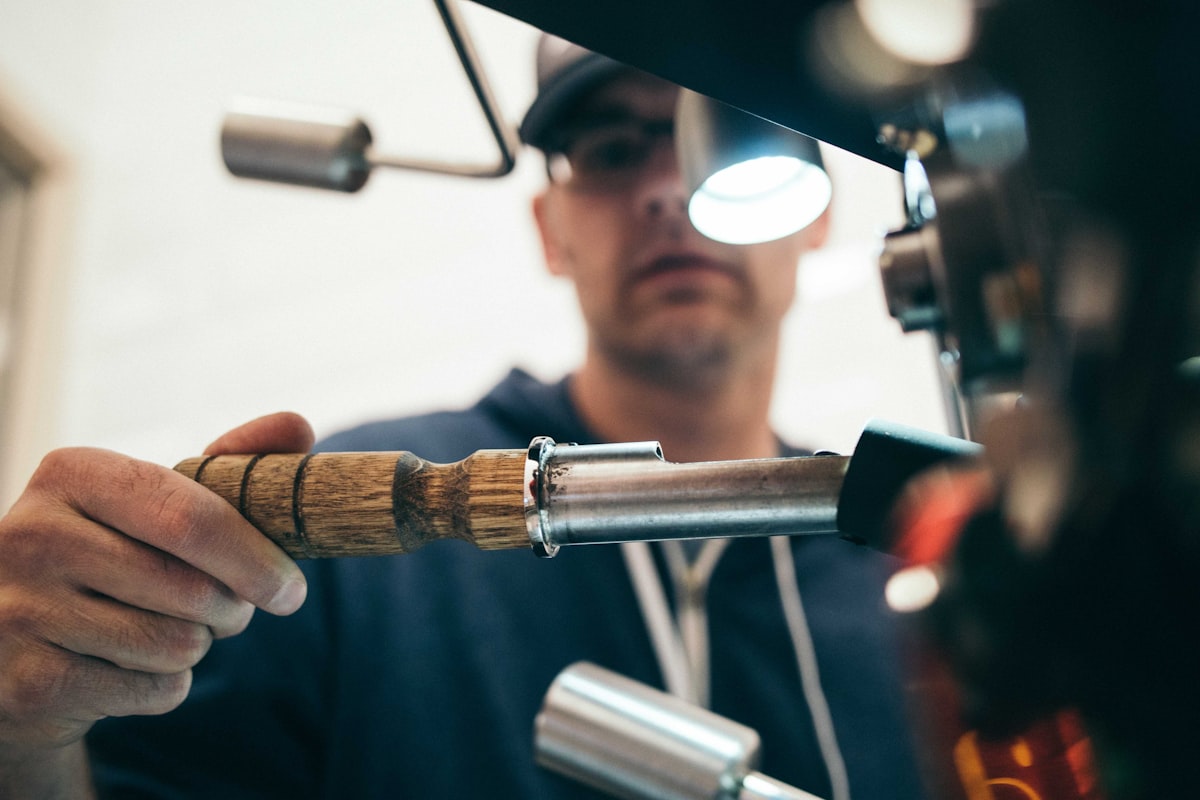
No brand has practised sustainability longer than Hermès — not because it uses that language, but because its entire model is built on objects designed to outlast their owners. The Birkin produced today will be carried in 2060; the Kelly carried today was produced in 1990. The house sources leather under the Livestock Welfare Initiative, partners with LWG-certified tanneries, and offers lifetime repair on all leather goods. In the sustainable luxury leather brand conversation, longevity — the original sustainability — is Hermès’s most credible credential.
7. Mansur Gavriel — vegetable tanning as founding principle
Mansur Gavriel built its brand on a specific material commitment: vegetable-tanned leather from Italian tanneries, unlined, uncoated and as close to the raw material as fine leatherwork allows. This is not a sustainability pivot — it was the founding premise in 2012. The transparent supply chain (Italian leather, Italian production) and the absence of unnecessary processing make Mansur Gavriel one of the most honest sustainable luxury leather brands in terms of material integrity. Entry from €495.
8. Bottega Veneta — zero-logo and long-horizon design
Bottega Veneta’s sustainability credentials are concentrated in three areas: LWG Gold-rated leather sourcing, manufacturing workshops operating under strict waste-reduction protocols, and a design philosophy explicitly oriented toward longevity rather than seasonal obsolescence. A bag without a visible logo cannot date; a bag that cannot date will not be replaced on aesthetic grounds. Among sustainable luxury leather brands, Bottega Veneta’s approach is the most design-integrated.
9. Loewe — craft preservation as environmental act
Under Jonathan Anderson, Loewe has positioned craft preservation — through the Loewe Foundation and its annual Craft Prize — as a form of sustainability: keeping traditional skills alive reduces the homogenisation and disposability of mass production. The house sources leather responsibly, manufactures primarily in Spain and Portugal, and produces bags (the Puzzle, the Flamenco) explicitly designed for repair and decade-long use. A serious entry in the sustainable luxury leather brands conversation.
10. Cuyana — fewer, better
Founded in San Francisco in 2011 on the principle of “fewer, better things”, Cuyana occupies an important position among sustainable luxury leather brands: accessible price, traceable sourcing, and a supply chain model that rejects overproduction. Leather is sourced from LWG-certified Argentine tanneries; the Classic Zip Tote is manufactured in the same Buenos Aires workshop since the brand’s founding. The Lean Closet programme encourages customers to donate unused pieces rather than discard them. Entry from €295.
Sustainable Luxury Leather Brands: Comparison Table
| Brand | Key certification | Leather sourcing | Manufacturing | Longevity design | Price range |
|---|---|---|---|---|---|
| Chloé | B Corp | LWG-certified | Global (responsible) | Repair & resale programme | €700–€3,500 |
| Gabriela Hearst | Carbon offset | Traceable, veg-tan | New York / Italy | Traceability report per bag | €1,500–€5,000 |
| Stella McCartney | No animal leather | Bio-based / vegan | Italy / Global | Material innovation | €600–€3,000 |
| Brunello Cucinelli | Humanistic capitalism | LWG standards | Solomeo, Italy | Above-wage artisanal production | €1,200–€6,000 |
| Mulberry | Natural programme | British tanneries | Somerset, England | Mulberry Exchange resale | €500–€2,000 |
| Hermès | Livestock Welfare Init. | LWG tanneries | France / in-house | Lifetime repair, 30-50y design | €5,000–€50,000+ |
| Mansur Gavriel | Veg-tan founding | Italian veg-tan | Italy | Uncoated leather, ages well | €295–€1,200 |
| Bottega Veneta | LWG Gold leather | LWG Gold-rated | Italy (in-house) | Logo-free, no seasonal dating | €1,500–€8,000 |
| Loewe | Craft Prize / Foundation | Spain / Portugal | Iberian Peninsula | Puzzle / Flamenco repairable | €900–€5,000 |
| Cuyana | LWG-certified sourcing | Argentine LWG | Buenos Aires | Lean Closet donation programme | €295–€900 |
5 Questions to Ask Before Buying from a Sustainable Luxury Leather Brand
- Does the brand name its tanneries? Genuine sustainable luxury leather brands can tell you where their hides are tanned. “Responsibly sourced” without a named tannery or certification is marketing language, not accountability.
- What is the tanning method? Vegetable tanning (bark, plant extracts) is the most environmentally sound option. Chrome tanning, used in most fashion leather, is faster and cheaper but involves heavy metals. LWG certification ensures responsible chrome disposal even when chrome tanning is used.
- Is repair offered and accessible? A brand that cannot repair its bags after five years is not designing for longevity. The most credible sustainable luxury leather brands operate or partner with repair ateliers and make spare parts available for years after purchase.
- Where is the bag made? Short supply chains are more auditable and typically more ethical. In-house manufacturing (Hermès, Brunello Cucinelli) or regional manufacturing (Mulberry in England, Cuyana in Buenos Aires) reduces both footprint and oversight gaps.
- Does the design transcend seasons? The most sustainable purchase is the one that stays in your wardrobe for twenty years. A sustainable luxury leather brand that releases thirty new styles per season is undermining its sustainability claims through volume, whatever its tanning practices.
FAQ — Sustainable Luxury Leather Brands
Which is the most sustainable luxury leather brand?
Chloé holds the most rigorous third-party certification (B Corp) among major luxury houses. Gabriela Hearst offers the most transparent per-bag traceability. Hermès represents the most credible longevity model. Among sustainable luxury leather brands, the “most sustainable” depends on which dimension of sustainability you prioritise: certification, material sourcing, labour conditions or design lifespan.
Is vegan leather more sustainable than animal leather?
Not necessarily. Most vegan leathers are polyurethane (PU) or PVC — petroleum-derived plastics that do not biodegrade and shed microplastics throughout their lifespan. Next-generation vegan leathers (mycelium, Pinatex, apple-based) are more promising but not yet at luxury scale. Vegetable-tanned full-grain leather from a certified tannery, used in a bag designed to last thirty years, has a compelling sustainability case that most vegan alternatives cannot currently match on lifecycle analysis.
How do I know if a brand’s sustainability claims are genuine?
Look for independently audited certifications: B Corp, LWG Gold, OEKO-TEX, Fair Trade. Read beyond the landing page — genuine sustainable luxury leather brands publish annual sustainability reports with specific metrics (percentage of responsible materials, carbon emission figures, supplier lists). Be sceptical of brands whose sustainability claims consist entirely of aspirational language without verifiable targets or third-party verification.
